The Growth Struggle Every Small Business Faces
Let’s be honest — running a small business can feel like juggling flaming swords while riding a unicycle.
You’re chasing clients, managing invoices, posting on social media, and trying to remember if you fed the office plant this week.
At some point, though, every business owner faces the same question:
“How do I grow without burning out?”
That’s where digital tools come in — not as shiny toys, but as real business multipliers. In fact, according to a Deloitte study, small businesses that embrace digital tools grow revenue up to four times faster than those that don’t.
And the best part? You don’t need Silicon Valley funding or a 10-person IT team to make it happen.

Why Scaling with Digital Tools Works
Scaling is more than just “getting bigger.”
It’s about increasing your capacity without proportionally increasing costs, time, or stress.
Digital tools help by:
- Automating repetitive tasks (think: scheduling, invoicing, follow-ups)
- Improving decision-making through real-time analytics
- Streamlining communication inside your team and with customers
- Expanding reach via online marketing platforms
When you use them right, you can literally do more with less — and keep your sanity intact.
1. Automate the Mundane: Work Smarter, Not Harder
If your day is eaten up by repetitive admin work, you’re not running your business — your business is running you.
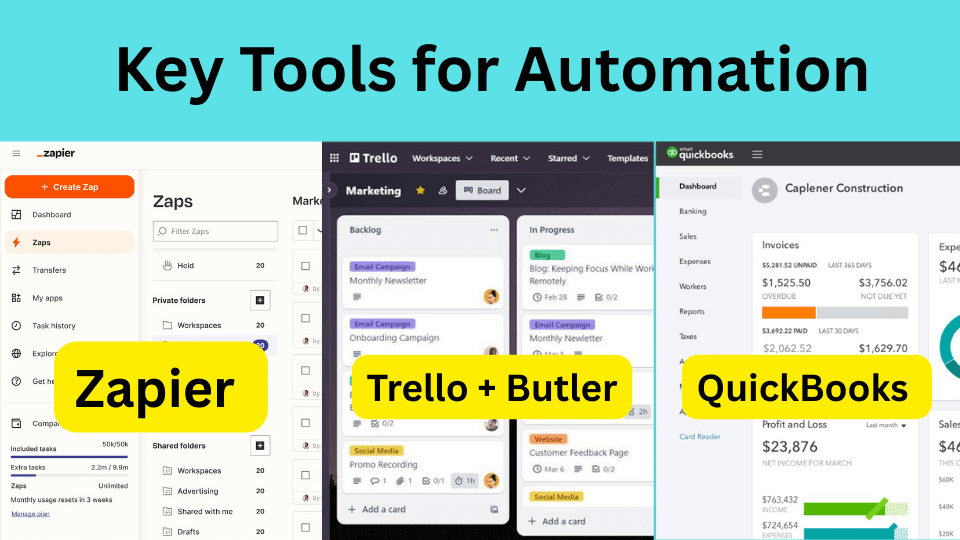
Key Tools for Automation
- Zapier – Connects your apps and automates workflows
- Trello + Butler – Project management with built-in task automation
- QuickBooks – Handles invoicing, expense tracking, and financial reporting
Example from my own work:
I once spent an hour every Monday manually sending client follow-up emails. Then I set up a Zapier + Gmail workflow — now, it takes 0 minutes. That’s nearly 52 hours a year back in my pocket.
Pro Tip:
Start with automating your top 3 time-wasting tasks. You’ll see results faster and avoid feeling overwhelmed.
2. Scale Your Marketing Without Hiring an Army
Marketing can be one of the most resource-hungry parts of business growth.
Luckily, the right digital tools act like a 24/7 marketing assistant.
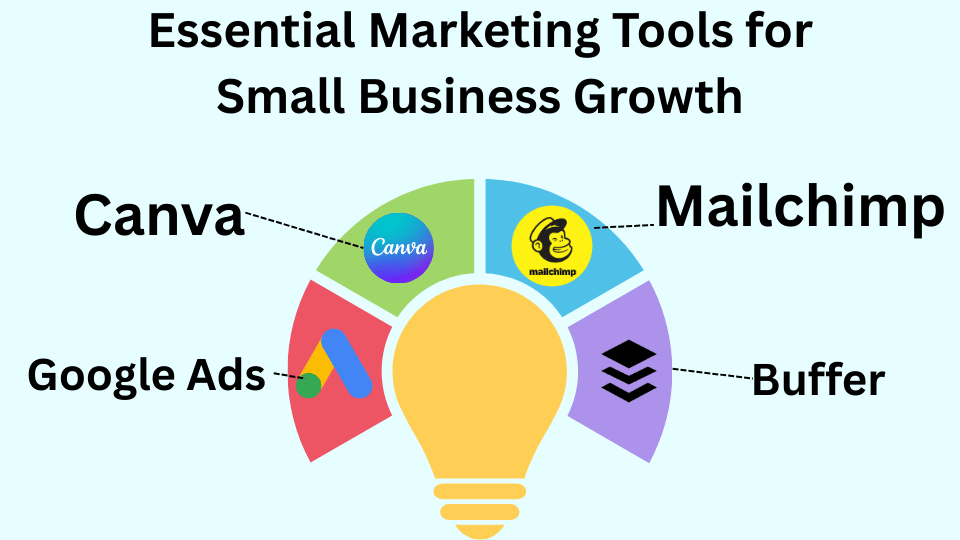
Essential Marketing Tools for Small Business Growth
- Canva – Design social posts, flyers, and ads without a graphic designer
- Buffer or Hootsuite – Schedule content across multiple social platforms
- Mailchimp – Automate email campaigns and segment your audience
- Google Ads – Target potential customers searching for your product/service
Why This Works
Automation + targeting = efficiency.
Instead of posting manually or guessing at ad targeting, these tools help you reach the right audience at the right time — consistently.
3. Strengthen Customer Relationships with CRM Tools
When you have 10 customers, remembering everyone’s details is easy.
When you have 200, it’s chaos without a system.
A Customer Relationship Management (CRM) tool keeps everything in one place — from purchase history to last conversation.
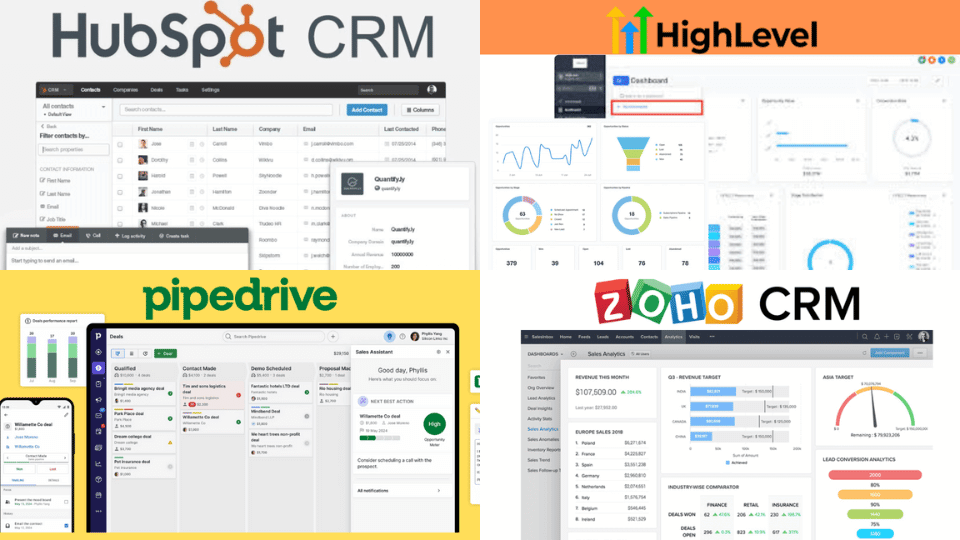
Recommended CRM Tools:
- HubSpot CRM – Free to start, great for growing teams
- Zoho CRM – Affordable with powerful customization
- Pipedrive – Simple interface, perfect for sales-focused teams
- GoHighLevel — a powerful CRM and all-in-one marketing automation platform designed for small businesses and agencies.
Why GoHighLevel Stands Out
- All-in-One Dashboard: CRM, sales pipelines, email campaigns, SMS, funnels — all in one place.
- Automated Follow-Ups: No more “forgot to email back” moments.
- White-Label Capabilities: Perfect if you want to brand your own CRM for clients.
I personally like GoHighLevel because it doesn’t just store data; it helps you act on it. I’ve seen small businesses increase lead conversion rates by 20–30% just by automating their follow-up process.
4. Use Data Analytics to Make Smarter Moves
Scaling without tracking results is like driving with your eyes closed.
Analytics tools show you what’s working and what’s wasting time/money.
Analytics Tools Worth Your Attention
- Google Analytics 4 (GA4) – Track website traffic, conversions, and user behavior
- Hotjar – See how visitors actually use your site through heatmaps
- Tableau Public – Turn raw data into visual insights
From my experience, small tweaks based on analytics — like changing a button color or simplifying a checkout form — can increase conversions by 20–30%.
5. Collaborate Like a Big Team (Even If You’re Small)
Scaling often means adding more people — even if they’re freelancers or part-timers.
Digital collaboration tools keep everyone on the same page.
Best Collaboration Tools:
- Slack – Real-time team communication
- Google Workspace – Docs, Sheets, and Drive for easy file sharing
- Asana – Task tracking and workflow management
The faster your team can share info and solve problems, the faster you can grow.
6. Financial Tools to Keep Growth Profitable
More sales mean more complexity in finances.
Without the right systems, scaling can lead to messy bookkeeping and cash flow issues.
Financial Tools to Consider:
- Wave – Free accounting for small businesses
- Xero – Scales with your business, great for inventory + payroll
- Expensify – Automates expense reports and approvals
7.Leverage AI Tools to Save Time and Make Smarter Decisions
AI isn’t just for tech startups — it’s for you. The latest generation of AI tools can handle tasks in content creation, customer service, data analysis, and even marketing strategy.
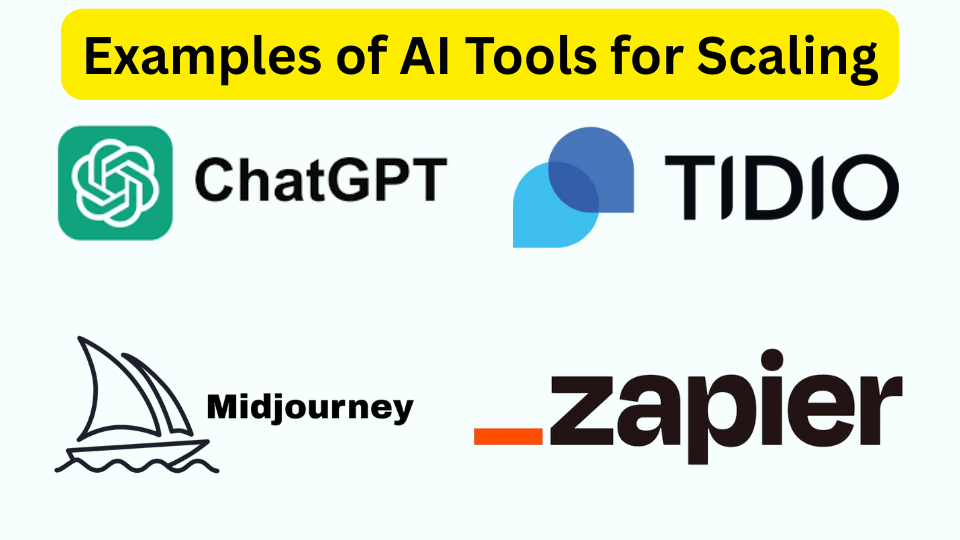
Examples of AI Tools for Scaling
- ChatGPT / Jasper: For generating blog posts, social media captions, and product descriptions.
- Midjourney / Canva AI: For quickly creating professional visuals.
- Tidio AI / Intercom: For 24/7 customer support chatbots.
- Zapier AI: For automating workflows across your apps.
Pro Tip:
Don’t use AI to replace your brand’s voice — use it to speed up repetitive work so you can focus on high-value decisions.
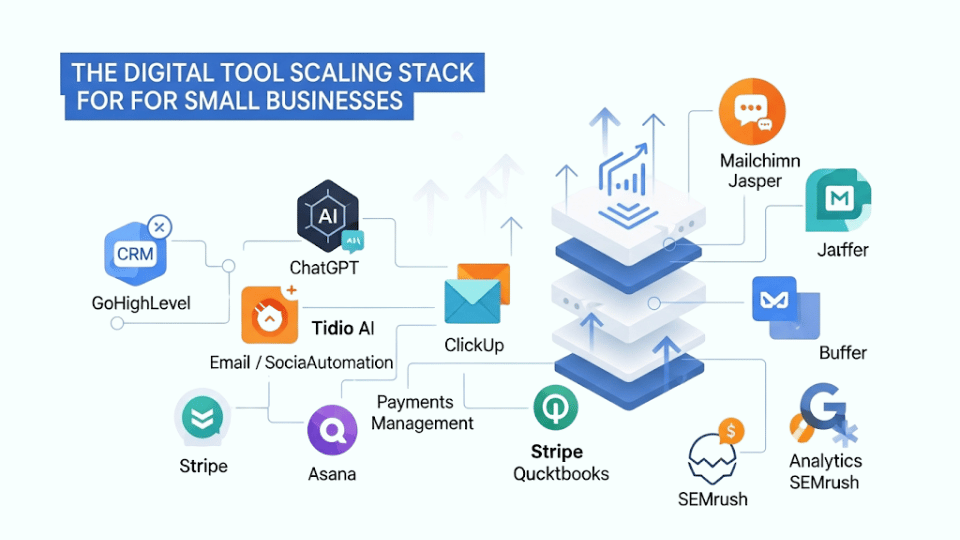
The Digital Tool Scaling Stack for Small Businesses (Quick List)
- CRM & Marketing Automation: GoHighLevel
- AI Content & Support: ChatGPT, Jasper, Tidio AI
- Email & Social Automation: Mailchimp, Buffer
- Project Management: ClickUp, Asana
- Payments & Accounting: Stripe, QuickBooks
- Analytics & SEO: Google Analytics, SEMrush
Common Mistakes to Avoid When Scaling with Digital Tools
- Buying too many tools at once – You’ll end up overwhelmed and underusing them.
- Ignoring team training – A tool is only as good as the person using it.
- Not integrating tools – If your apps don’t talk to each other, you’ll create more work, not less.
Action Plan to Start Scaling Today
- Audit your current workflow — list what’s manual vs. automated
- Identify your biggest bottleneck (sales, marketing, operations, finance)
- Pick one tool to solve that problem first
- Measure the results after 30 days
- Add more tools only when you’ve mastered the last one
Conclusion: Scaling Is About Smarter, Not Harder
If you’re serious about growth, start small — choose one or two tools from each category, implement them well, and build from there.
The small businesses that win aren’t always the ones with the biggest budgets — they’re the ones that use technology strategically.
FAQs
1. What digital tools help small businesses scale fastest?
Automation, CRM, analytics, and marketing platforms are the top growth drivers.
2. How can small businesses scale using digital tools without big budgets?
Start with free or low-cost tools like Canva, Wave, and HubSpot CRM, then upgrade as you grow.
3. Are digital tools worth it for a very small team?
Yes — even solo entrepreneurs benefit from automation and analytics.
4. How do I choose the right tool for scaling?
Focus on solving your biggest bottleneck first, then expand to other areas.
5. Can digital tools replace hiring staff?
They can delay the need for more hires by increasing efficiency, but human skills are still essential.